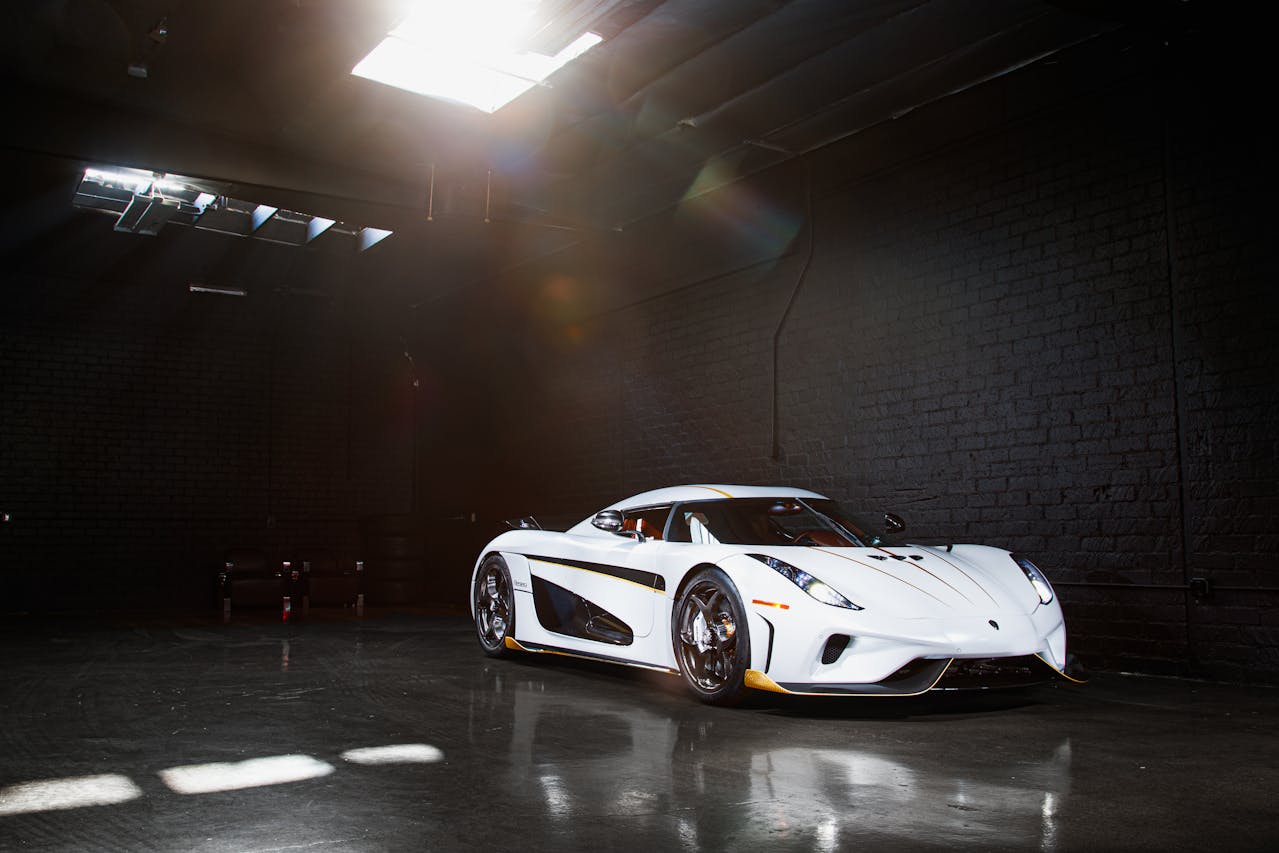
Here’s the simple answer up front: in 2025, “the fastest car in the world” depends on how you define fastest. If you mean the highest verified two-way top speed on a public road by a homologated production car, the Koenigsegg Agera RS still holds that crown at an average of 277.87 mph (446.97 km/h). If you mean the highest single-direction top speed ever recorded by a production-based car, the Bugatti Chiron Super Sport 300+ hit 304.77 mph (490.48 km/h). And if you’re asking about the fastest electric car by absolute top speed, BYD’s YangWang U9 Track Edition just claimed 293.5 mph (472.4 km/h) in August 2025. Each of those is “fastest” under a different rulebook, which is why the debate never ends.
Below, we’ll break down what “fastest” really means in 2025, how each record is measured, and why your answer changes based on the criteria you care about. We’ll also show how close the next wave of hypercars is to moving the goalposts again. And throughout, we’ll keep this grounded in what matters to everyday drivers in Florida—because unless you’re booking runway time, Signature Auto Group Florida can help you channel some of that performance magic into a realistic, daily-drivable lease.
What “fastest” actually means in 2025
Car media tosses around “world’s fastest” like it’s a single title. It’s not. Here are the main ways speed is measured and why they lead to different champions:
-
Two-way verified top speed (public road, production car): This is the most conservative and universally respected metric. The car must run in both directions on the same course (to cancel out wind and slope), and the average of those runs is the official number. On that standard, the Koenigsegg Agera RS set 277.87 mph on a Nevada highway in 2017, and it remains unbeaten for a homologated production car on a public road.
-
Single-direction V-max (often on a test track/prototype): Impressive and headline-grabbing, but not a two-way average. In 2019, Bugatti’s Chiron Super Sport 300+ became the first production-based car to break 300 mph—304.77 mph—on VW’s Ehra-Lessien test track, verified by Germany’s TÜV. Bugatti did not run a return pass, so it isn’t a two-way record, but it’s still the highest one-way speed any production-based car has achieved.
-
Closed-course two-way average (not a public road): In 2021 the SSC Tuatara recorded a 282.9 mph two-way average at Space Florida’s runway, and in 2022 it peaked at 295.0 mph in a separate one-way sprint. The January 2021 run is independently verified; the 2022 295 mph is a certified one-way maximum. Debate persists about which records various bodies officially recognize, which is why many outlets still treat the Agera RS as the production-car “record holder” for the public-road standard.
-
Acceleration/braking records (0–400–0 km/h, 0–250–0 mph): These prove overall performance, power delivery, traction, and stopping ability. In August 2025, the Koenigsegg Jesko Absolut set a blistering 25.21 seconds for 0–400–0 km/h (0–249–0 mph 25.67s), directly topping recent EV and Koenigsegg benchmarks. This isn’t a top-speed record but shows how rapidly modern hypercars get to—and shed—speed.
-
Electric-vehicle top speed: EVs are now deep into the conversation. In 2024, the Aspark Owl SP600 set a 272.6 mph (438.7 km/h) EV top-speed record recognized by Guinness for an electric prototype hypercar; in 2025, BYD’s YangWang U9 Track Edition claimed 293.5 mph in a single-direction run at Germany’s ATP Papenburg, which would make it the fastest EV by absolute peak speed to date (though not a two-way average).
Because those standards differ, there’s no single, permanent “fastest” badge. Instead, there are fastest-in-class crowns—each meaningful in its own way.
The top-speed title under the strictest standard
When you require a two-way average on a public road using a homologated production car, one name still stands: Koenigsegg Agera RS, 277.87 mph, set on November 4, 2017. That number wasn’t a one-time spike; it was the average of runs in both directions, performed on a Nevada highway, with an owner’s car. Koenigsegg itself continues to describe it as the “still-undefeated” public-road production-car top-speed record.
Two-way averaging matters. It removes tailwind and gradient advantages, and doing it on a public road adds real-world risk and variability. That’s why many purists still consider this the most credible crown—fastest production car, public road, two-way average—and the Agera RS remains the benchmark to beat under those exact rules.
The first (and fastest) to 300 mph in a single direction
Even if it isn’t a two-way record, Bugatti’s Chiron Super Sport 300+ will always be the first production-based car to break 300 mph, verified at 304.77 mph on Ehra-Lessien. Bugatti tuned aerodynamics for ultra-high speed, lengthened the tail, and ran on a track purpose-built for V-max attempts. Guinness didn’t certify it due to the missing return run; still, the feat was TÜV-verified and sits atop the one-way leaderboard. If your definition is “the highest speed any production-based car has ever reached,” Bugatti’s 304.77 mph is the answer.
The Tuatara’s place in the record book
After a controversial 2020 claim, SSC re-ran the Tuatara with additional third-party verification. In January 2021 it achieved a two-way average of 282.9 mph at Space Florida’s runway—faster than the Agera RS’s 277.87 mph average—and in May 2022 the car hit 295.0 mph in a separate one-way sprint, again with independent data logging. Some authorities still treat Koenigsegg’s public-road record as the production standard; others cite the Tuatara’s 282.9 mph two-way average as the fastest for a production car regardless of venue. Practically, both numbers matter—and both show where technology has already taken us.
The EV shock wave: 293.5 mph (claimed) in 2025
For years the Rimac Nevera defined EV speed with a verified 258 mph top speed and a barrage of acceleration records. In 2024 the Aspark Owl SP600 raised the EV ceiling to 272.6 mph with a Guinness-recognized run for a prototype category. Then, in August 2025, BYD’s YangWang U9 Track Edition stunned the world by hitting 293.5 mph (single direction) at Germany’s ATP Papenburg with driver Marc Basseng—an absolute EV top speed higher than Aspark’s two-way mark, though it awaits two-way confirmation. It’s further proof that electric hypercars aren’t just about instant torque—they’re rapidly closing on, or surpassing, combustion benchmarks even in V-max.
The acceleration/braking benchmark in 2025
Raw top speed is only one way to define “fast.” The 0–400–0 km/h (0–249–0 mph) test captures how quickly a car can gain and shed speed—hugely relevant for any real track or road scenario. In August 2025, the Koenigsegg Jesko Absolut set a new record of 25.21 seconds, beating its own previous mark and eclipsing the best EV attempts to date. That’s race-car territory for a road-legal machine.
So… what’s the fastest car in the world in 2025?
It’s best answered as three titles:
-
Fastest production car (two-way, public road): Koenigsegg Agera RS – 277.87 mph. Still the reference for the strictest standard.
-
Highest single-direction speed by a production-based car: Bugatti Chiron Super Sport 300+ – 304.77 mph. First over 300 mph; one-way run, TÜV-verified.
-
Fastest EV by absolute peak speed (2025 claim): BYD YangWang U9 Track Edition – 293.5 mph (one-way). Aspark’s 272.6 mph remains the certified two-way benchmark in the EV world for its prototype category; YangWang’s run shows how fast EVs are scaling.
If your definition is the most conservative, the Agera RS is still “the fastest.” If you’re chasing the biggest number ever seen on a speedometer from a production-based hypercar, Bugatti wears the crown. And if you’re curious about where electrification has already pushed the envelope, the YangWang U9 has jumped to the front in absolute V-max.
Why these runs are so hard (and why records stand for years)
Breaking these records isn’t just about horsepower. Teams must solve:
-
Aero stability vs. drag: Beyond ~250 mph, minuscule aero changes mean huge stability differences. Bugatti lengthened and reshaped the Chiron’s tail to stay planted above 300 mph, and others use active aero and special bodywork strictly for the attempt.
-
Tires at 300 mph: The contact patch is everything. Companies often collaborate with tire makers to design bespoke compounds and reinforced carcasses. Note how Aspark and YangWang both partnered for specialized semi-slicks built to survive near-300 mph loads.
-
Verification tech: Modern runs rely on Racelogic VBOX and parallel GPS systems; multiple independent observers are typical for credibility, especially after the skepticism that followed early Tuatara claims.
-
Venue constraints: You need miles of safe, smooth pavement—runways like Space Florida’s Launch and Landing Facility or specialized high-speed ovals like Ehra-Lessien and ATP Papenburg. Weather windows, crosswinds, and even road crown matter.
Because the variables are so demanding—and the risk enormous—top-speed runs happen rarely. That’s why a seven- or eight-year-old record can still be the one to beat in 2025.
What to watch next (2025–2026)
-
Koenigsegg Jesko Absolut top-speed attempt: Koenigsegg has long said the Absolut is optimized to go beyond 300 mph. Given its braking/acceleration records, an official two-way top-speed run would be must-see news.
-
Hennessey Venom F5: The F5 program continues public high-speed testing (including a VBOX-verified ½-mile 221–222 mph). A verified two-way attempt over 500 km/h (311 mph) is the stated goal.
-
EV escalation: Aspark’s certified 272.6 mph raised the bar; YangWang’s 293.5 mph one-way claim shows there’s more headroom. Expect a formal two-way EV attempt to land soon.
Bringing “fast” down to earth in Florida
Most of us won’t see 300 mph—ever. But the engineering that pushes hypercars forward eventually trickles down into performance sedans, coupes, and SUVs you can enjoy every day, from launch-control all-wheel drive to advanced brake-by-wire systems and adaptive aerodynamics.
If you’re in Fort Lauderdale or anywhere in the state and want a performance-focused daily driver—or just something that makes I-95 feel less like a chore—Signature Auto Group Florida can help you lease a car that fits the vibe without hypercar pricing. We’re a Car Leasing Broker in Florida that understands the difference between marketing numbers and real-world livability, and we know which models deliver the most fun per mile right now.
-
Interested in a sharp sport sedan with a track-ready package? Ask about Fort Lauderdale Car Leasing specials on models that punch above their weight.
-
Want something rapid but comfortable for the family? We’ll pair you with a Florida Short Term Car Lease on a performance SUV that won’t beat you up on daily commutes.
-
Prefer maximum value? Our Auto Leasing Florida team will compare programs across lenders—FL Car Leasing is all about structuring terms that keep your payment, mileage, and residuals in balance.
Whether you’re a numbers-nerd hunting lap times or you just want the quickest on-ramp merges in the neighborhood, Signature Auto Group Florida can translate today’s tech into a monthly payment that makes sense.
Buyer’s guide: speed you can actually use
If the idea of “fastest” has you itching to upgrade, here’s how to think about it practically:
-
Acceleration > top speed for street use. Quarter-mile times, 0–60, and 0–100 mph tell you how lively a car feels every day. Jesko’s and Rimac’s 0–400–0 feats show how modern cars reframe acceleration and braking.
-
Brakes and tires matter as much as power. Stopping from 100 mph repeatedly without fade is what separates toys from tools. Many performance trims add larger rotors, multi-piston calipers, and summer tires that transform feel.
-
Adaptive dampers and active aero improve confidence. Even “mild” performance cars use tech derived from hypercars—translation: better body control and stability at Florida highway speeds, in heat and rain.
-
Leasing lets you ride the wave. With pace of change this quick—especially in EVs—leasing keeps you close to the frontier without long-term risk. It’s one reason Car Leasing remains popular among enthusiasts who like to sample the newest hardware every 24–36 months.
-
Short-term commitments exist. Not sure about a powertrain, charging, or new model? Consider a Florida Short Term Car Lease to test the waters before you commit.
Final take
As of August 2025, the “fastest car in the world” answers are plural:
-
Agera RS for the strictest public-road, two-way production standard (277.87 mph).
-
Chiron Super Sport 300+ for the highest single-direction V-max by a production-based car (304.77 mph).
-
YangWang U9 Track Edition for the highest claimed EV top speed by absolute peak (293.5 mph one-way), with Aspark Owl SP600 the Guinness-recognized EV prototype two-way record holder at 272.6 mph.
No matter which definition you pick, the bigger story is how quickly the ceiling keeps moving—especially on the electric side. If you’re ready to feel a slice of that progress on Florida roads, Signature Auto Group Florida can help you Lease a Car that brings modern performance within reach—smart, simple, and tailored to how you drive every day through our Auto Leasing Florida programs.
Search Our Car Lease Deals